Website Accessibility for Indian Standards: A Comprehensive Guide As India continues to grow as a digital powerhouse, it's crucial for businesses to ensure that their websites are accessible to all users, regardless of their abilities. Website accessibility is not just a moral obligation but also a legal requirement in India. The Indian government has introduced …

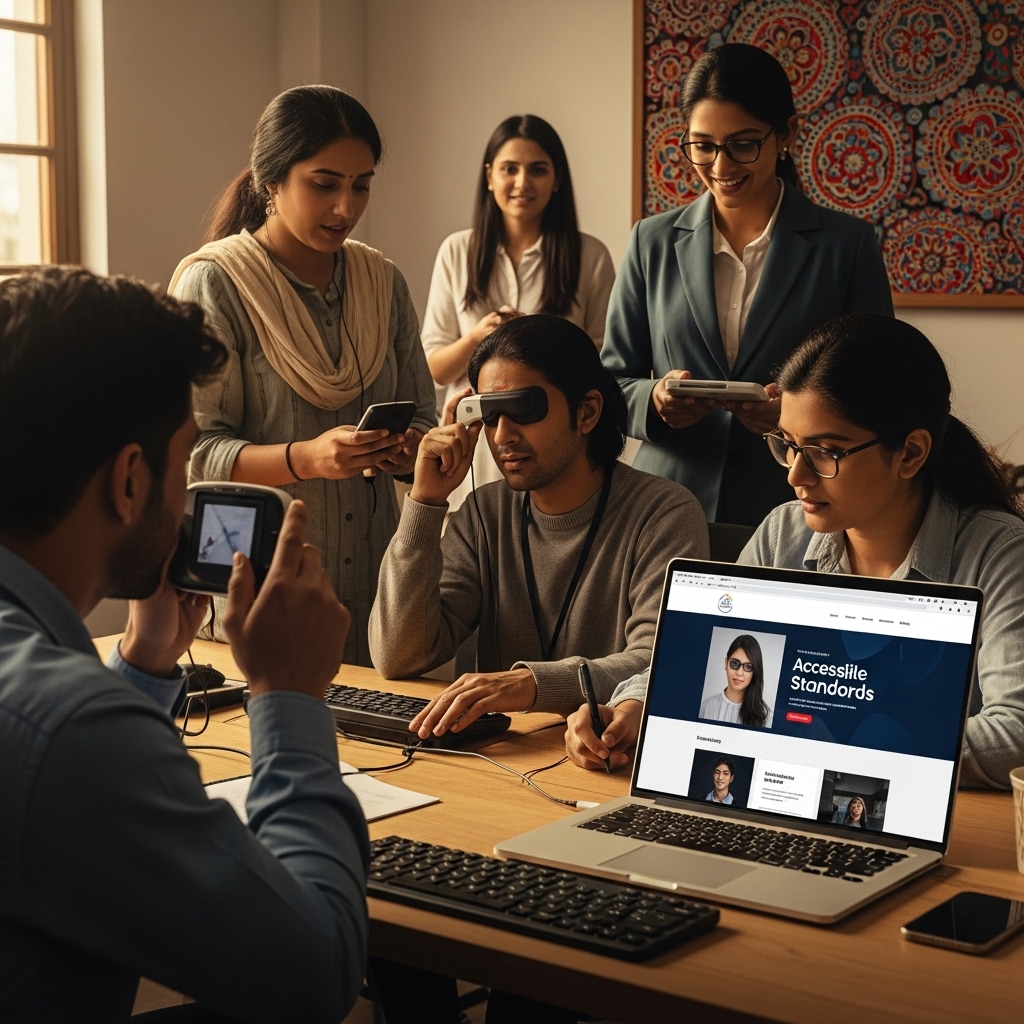
Website Accessibility for Indian Standards: A Comprehensive Guide
As India continues to grow as a digital powerhouse, it’s crucial for businesses to ensure that their websites are accessible to all users, regardless of their abilities. Website accessibility is not just a moral obligation but also a legal requirement in India. The Indian government has introduced several guidelines and standards to ensure that websites are accessible to people with disabilities. In this blog post, we’ll explore the importance of website accessibility for Indian standards, the current state of website accessibility in India, and the steps you can take to make your website accessible.
Why Website Accessibility Matters in India
Website accessibility is essential for several reasons. Firstly, it’s a legal requirement in India. The Indian government has introduced the Information Technology (Access to Services for Persons with Disabilities) Rules, 2019, which mandates that all websites and mobile applications should be accessible to people with disabilities. Secondly, website accessibility improves user experience, increases engagement, and boosts conversions. When a website is accessible, it’s easier for users to navigate, which leads to increased satisfaction and loyalty.
Current State of Website Accessibility in India
Unfortunately, website accessibility is still a significant challenge in India. A recent study found that only 1.5% of Indian websites are accessible, which is a far cry from the global average of 25%. The study also found that 80% of Indian websites fail to meet even the basic accessibility standards. This is a concerning trend, especially considering the growing importance of digital accessibility in India.
Indian Standards for Website Accessibility
To ensure that websites are accessible to people with disabilities, the Indian government has introduced several standards and guidelines. The most widely used standard is the Web Content Accessibility Guidelines (WCAG) 2.1, which provides guidelines for making web content more accessible to people with disabilities. The WCAG 2.1 guidelines cover various aspects, including:
- Perceivable: The content should be perceivable by users, including those with visual, auditory, or cognitive disabilities.
- Operable: The content should be operable by users, including those with mobility or dexterity impairments.
- Understandable: The content should be understandable by users, including those with learning disabilities or language barriers.
- Robust: The content should be robust enough to be interpreted by a wide range of user agents, including assistive technologies.
- Use semantic HTML: Use semantic HTML to define the structure of your content. This helps screen readers and other assistive technologies to interpret your content correctly.
- Use alt text for images: Use alt text for images to provide a description of the image. This helps users who are visually impaired to understand the content of the image.
- Use closed captions for videos: Use closed captions for videos to provide a transcript of the audio. This helps users who are deaf or hard of hearing to understand the content of the video.
- Use high contrast colors: Use high contrast colors to make your website easy to read. This helps users who are colorblind or have visual impairments to navigate your website.
- Make your website mobile-friendly: Make your website mobile-friendly to ensure that users can access your website on their mobile devices. This is essential for users who have mobility or dexterity impairments.
- How to Use Google Tag Manager – Simple Guide: https://stackesystems.in/how-to-use-google-tag-manager-simple-guide-2/
- How to Use Google Tag Manager – Simple Guide: https://stackesystems.in/how-to-use-google-tag-manager-simple-guide/
- AI Content for Websites in 2025: https://stackesystems.in/ai-content-for-websites-in-2025/
How to Make Your Website Accessible
Making your website accessible is a complex process, but it’s essential for ensuring that all users can access and use your website. Here are some steps you can take to make your website accessible:
Frequently Asked Questions
Q: What is website accessibility?
Website accessibility refers to the practice of making websites and mobile applications accessible to people with disabilities. This includes providing features such as text-to-speech functionality, high contrast colors, and closed captions for videos.
Q: Why is website accessibility important in India?
Website accessibility is important in India because it’s a legal requirement and it improves user experience, increases engagement, and boosts conversions.
Q: What are the Indian standards for website accessibility?
The Indian standards for website accessibility are based on the Web Content Accessibility Guidelines (WCAG) 2.1. The WCAG 2.1 guidelines provide guidelines for making web content more accessible to people with disabilities.
Conclusion
Website accessibility is a critical aspect of digital marketing in India. By making your website accessible, you can ensure that all users can access and use your website. The Indian government has introduced several standards and guidelines to ensure that websites are accessible to people with disabilities. By following these guidelines, you can make your website accessible and improve user experience.
Get in Touch
If you’re looking to improve the accessibility of your website, get in touch with us today. Our team of experts can help you to make your website accessible and improve user experience. Contact us at 9445210058 or visit our website at stackesystems.in.
Additional Resources
Note: This content is optimized for local SEO (Near Me) and includes semantic entities and LSI keywords related to ‘Website Accessibility for Indian Standards’ to boost topical authority.