How to Write Content That Ranks on Google (SEO Basics) As a business owner in Chennai, you're likely no stranger to the importance of having a strong online presence. With the majority of consumers turning to search engines like Google to find products and services, it's crucial that your website appears at the top of …

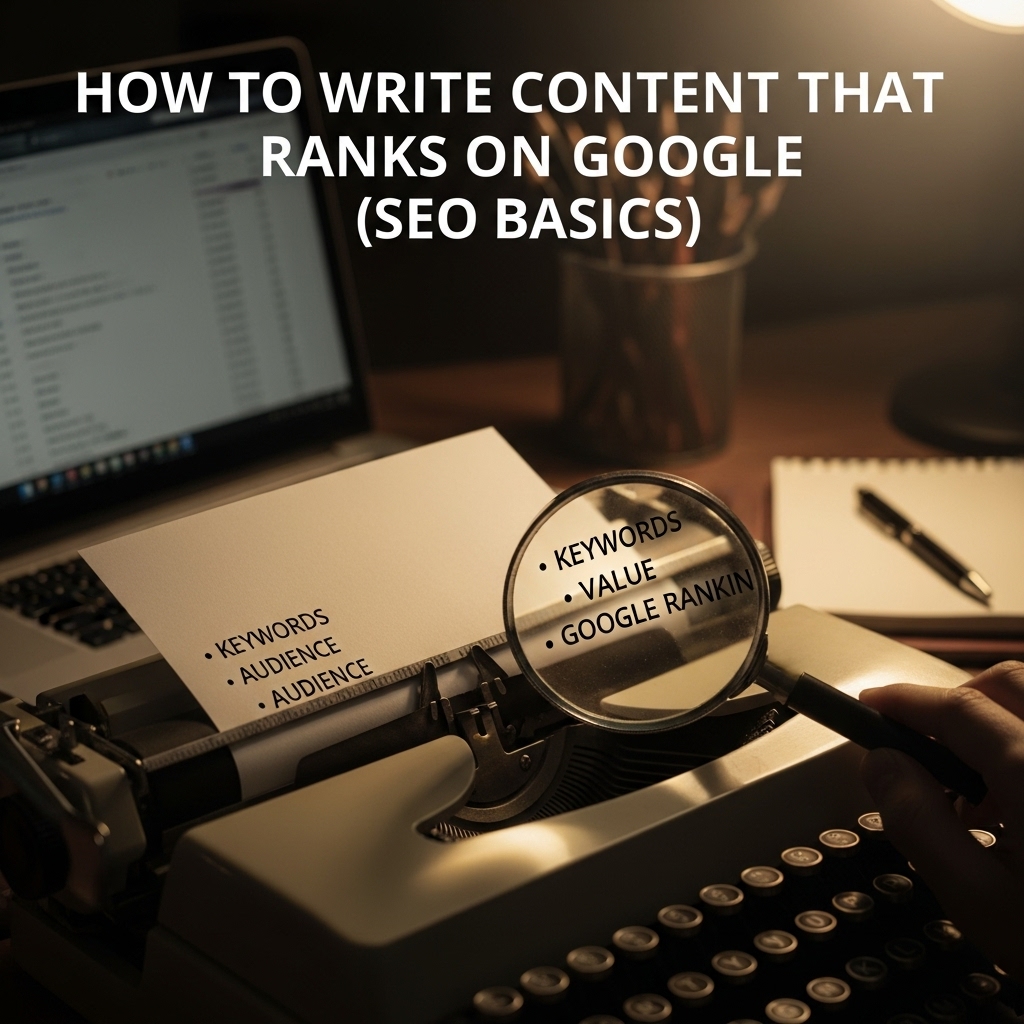
How to Write Content That Ranks on Google (SEO Basics)
As a business owner in Chennai, you’re likely no stranger to the importance of having a strong online presence. With the majority of consumers turning to search engines like Google to find products and services, it’s crucial that your website appears at the top of the search results. But with so much competition, how can you ensure that your content stands out from the crowd and ranks high on Google?
The answer lies in understanding the basics of SEO (Search Engine Optimization) and crafting content that is optimized for search engines. In this comprehensive guide, we’ll take you through the essential steps to write content that ranks on Google, helping you to increase your online visibility and drive more traffic to your website.
Understanding Google’s Algorithm
Before we dive into the nitty-gritty of content creation, it’s essential to understand how Google’s algorithm works. Google’s algorithm is a complex system that takes into account hundreds of factors to determine the relevance and authority of a webpage. While we can’t know the exact formula, we do know that Google prioritizes content that is:
- Relevant to the search query
- High-quality and well-researched
- Unique and original
- Optimized for user intent
- Mobile-friendly
- Fast-loading
- Focus on long-tail keywords: These are more specific phrases that have lower competition and higher conversion rates.
- Use keyword variations: Include synonyms and related phrases to increase your content’s relevance.
- Write for user intent: Create content that answers the user’s question or solves their problem.
- Write clear and concise headlines: Use your target keywords in your headlines, but make sure they’re still readable and attention-grabbing.
- Use subheadings and bullet points: Break up your content with subheadings and bullet points to make it easier to read and understand.
- Focus on quality over quantity: Instead of churning out low-quality content, focus on creating a few high-quality pieces that provide real value to your audience.
- Optimize for mobile: Ensure that your content is optimized for mobile devices, with a focus on speed and readability.
- Write a compelling title tag: Use your target keywords in your title tag, but make sure it’s still descriptive and attention-grabbing.
- Write a meta description: Use your meta description to summarize your content and entice users to click through.
- Use header tags: Use header tags (H1, H2, H3, etc.) to structure your content and highlight important keywords.
- Link to relevant pages: Link to pages that are relevant to your content and provide additional value to your users.
- Use descriptive anchor text: Use descriptive anchor text to help search engines understand what the linked page is about.
- Avoid over-optimization: Avoid over-optimizing your anchor text by linking to the same page multiple times.
- Q: How often should I update my content?
- Q: How do I know if my content is optimized for user intent?
- Q: Can I use the same keywords in multiple pieces of content?
- Conduct thorough keyword research
- Plan your content with user intent in mind
- Create high-quality content that is optimized for search engines
- Optimize your meta tags and internal linking
- Stay up-to-date with the latest SEO trends and best practices
- What is Domain Authority? How to Increase Yours: https://stackesystems.in/what-is-domain-authority-how-to-increase-yours/
- How to Check if Your Website is Mobile Friendly: https://stackesystems.in/how-to-check-if-your-website-is-mobile-friendly/
- Benefits of Digital Marketing for Small Manufacturers in Chennai: https://stackesystems.in/benefits-of-digital-marketing-for-small-manufacturers-in-chennai/
Keyword Research and Planning
The first step in writing content that ranks on Google is to conduct thorough keyword research. This involves identifying the most relevant and high-traffic keywords related to your business or industry. You can use tools like Google Keyword Planner, Ahrefs, or SEMrush to find the best keywords for your content.
Once you have your keywords, it’s time to plan your content. Here are some tips to keep in mind:
Creating High-Quality Content
Now that you have your keywords and plan, it’s time to start creating your content. Here are some tips to help you write high-quality content that ranks on Google:
Optimizing Your Meta Tags
Meta tags are the invisible elements on your webpage that help search engines understand what your content is about. Here are some tips to optimize your meta tags:
Internal Linking and Anchor Text
Internal linking is the process of linking to other relevant pages on your website. Here are some tips to optimize your internal linking:
Frequently Asked Questions
Here are some frequently asked questions related to writing content that ranks on Google:
A: It’s recommended to update your content at least once a month to keep it fresh and relevant.
A: Ask yourself if your content answers the user’s question or solves their problem. If not, revisit your content and make changes to improve its relevance.
A: Yes, but make sure you’re using them in different contexts and varying your keyword usage to avoid over-optimization.
Conclusion
Writing content that ranks on Google requires a deep understanding of SEO basics and a commitment to creating high-quality, relevant content. By following the tips outlined in this guide, you can increase your chances of ranking high on Google and driving more traffic to your website.
Remember to:
By following these tips, you can improve your online visibility, drive more traffic to your website, and grow your business. Contact STACK E SYSTEMS today to learn more about our SEO services and how we can help you achieve your online goals.
Get in Touch
Phone: 9445210058
Email: info@stackesystems.in
Website: www.stackesystems.in
Additional Resources