

How to Set Up Google Analytics 4 for Your New Website: A Step-by-Step Guide for Local Businesses As a business owner in [City/Town], you understand the importance of tracking your website's performance and making data-driven decisions to drive growth. With the recent introduction of Google Analytics 4 (GA4), it's more crucial than ever to set …

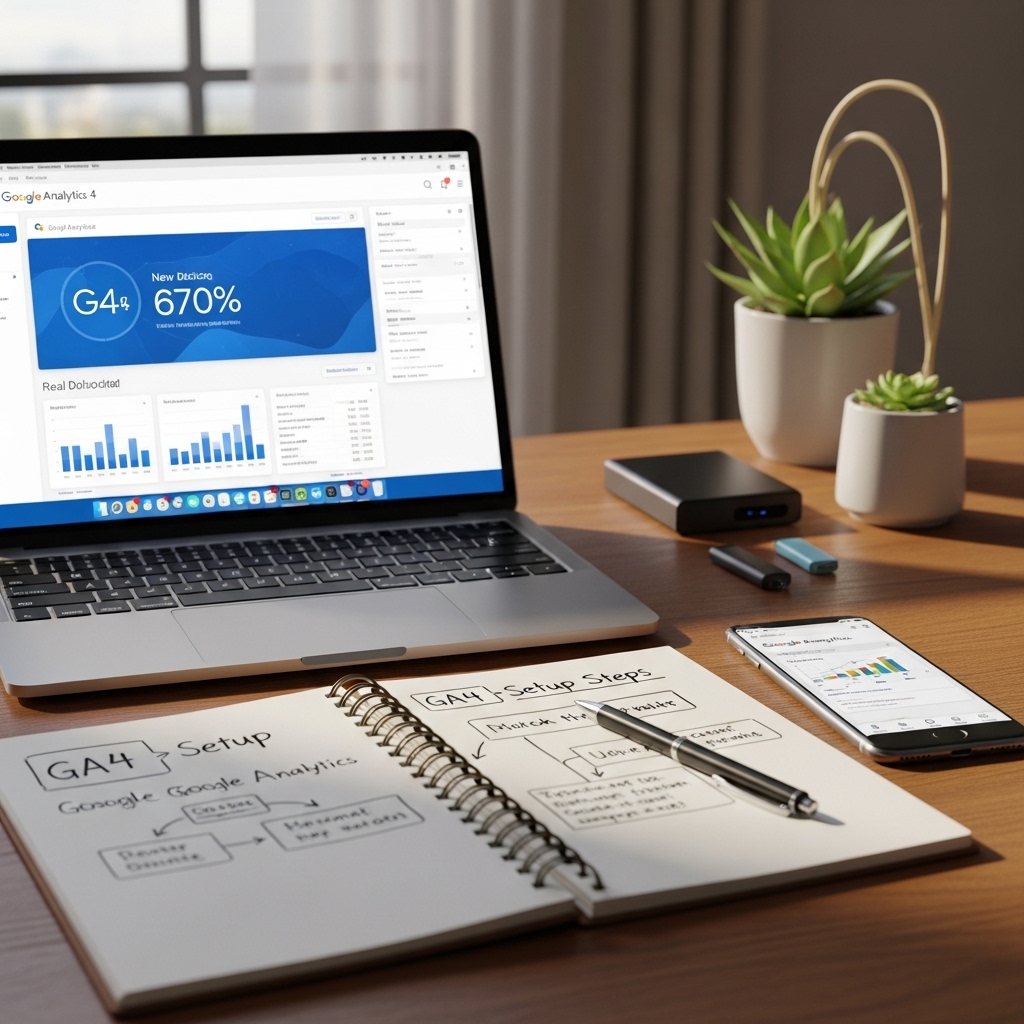
How to Set Up Google Analytics 4 for Your New Website: A Step-by-Step Guide for Local Businesses
As a business owner in [City/Town], you understand the importance of tracking your website’s performance and making data-driven decisions to drive growth. With the recent introduction of Google Analytics 4 (GA4), it’s more crucial than ever to set up this powerful tool to gain insights into your audience’s behavior, conversion rates, and overall online presence. In this comprehensive guide, we’ll walk you through the process of setting up Google Analytics 4 for your new website, ensuring you’re well-equipped to make informed decisions and optimize your online strategy.
Why Choose Google Analytics 4?
Before we dive into the setup process, let’s explore the benefits of using Google Analytics 4. Compared to its predecessor, Universal Analytics, GA4 offers a more streamlined and user-friendly interface, with enhanced features that provide deeper insights into your audience’s behavior. Some of the key advantages of GA4 include:
• Improved data accuracy: GA4 uses machine learning algorithms to improve data accuracy, reducing the risk of errors and inconsistencies.
• Enhanced audience insights: GA4 provides more detailed information about your audience, including demographics, interests, and behavior patterns.
• Streamlined event tracking: GA4 simplifies event tracking, making it easier to track user interactions with your website.
• Better support for mobile and cross-device tracking: GA4 is designed to work seamlessly with mobile devices and track user behavior across multiple devices.
Setting Up Google Analytics 4: A Step-by-Step Guide
1. Create a Google Analytics 4 Property:
Log in to your Google account and navigate to the Google Analytics website. Click on the “Sign in” button and select “Create property.” Choose “Website” as the property type and enter your website’s name and URL. Click “Create” to create your GA4 property.
2. Set Up Data Streams:
In the GA4 property, click on the “Data Streams” tab and then click on “New Data Stream.” Choose “Web” as the data stream type and enter your website’s URL. Make sure to select the correct measurement ID for your website.
3. Configure Event Tracking:
In the GA4 property, click on the “Events” tab and then click on “New Event.” Choose the type of event you want to track (e.g., button click, form submission, etc.) and configure the event settings accordingly.
4. Set Up Audience Insights:
In the GA4 property, click on the “Audience” tab and then click on “New Audience.” Choose the type of audience you want to target (e.g., demographics, interests, etc.) and configure the audience settings accordingly.
5. Integrate with Google Tag Manager:
If you’re using Google Tag Manager (GTM) on your website, you’ll need to integrate it with your GA4 property. This will allow you to track events and user interactions using GTM.
6. Verify Your Setup:
After setting up your GA4 property, verify that everything is working correctly by checking the “Real-Time” tab in your GA4 property. This will show you the current traffic and user interactions on your website.
Tips and Best Practices for Local Businesses
As a local business, it’s essential to optimize your GA4 setup for local SEO. Here are some tips and best practices to keep in mind:
• Use location-specific keywords: Include location-specific keywords in your GA4 property name and URL to improve visibility in search results.
• Track local search traffic: Use GA4 to track local search traffic and analyze the keywords and phrases that are driving traffic to your website.
• Monitor online reviews: Use GA4 to track online reviews and ratings from your customers, providing valuable insights into your business’s reputation.
• Optimize for mobile: Ensure your website is optimized for mobile devices, as this will improve user experience and conversion rates.
Frequently Asked Questions
Q: What is the difference between Google Analytics 4 and Universal Analytics?
A: Google Analytics 4 is a more modern and user-friendly version of Universal Analytics, offering improved data accuracy, enhanced audience insights, and streamlined event tracking.
Q: How do I integrate Google Tag Manager with Google Analytics 4?
A: To integrate Google Tag Manager with Google Analytics 4, you’ll need to create a new data stream in your GA4 property and configure the settings accordingly.
Q: Can I still use Universal Analytics?
A: Yes, you can still use Universal Analytics, but it’s recommended to migrate to Google Analytics 4 for improved data accuracy and enhanced features.
Conclusion
Setting up Google Analytics 4 for your new website is a crucial step in understanding your audience’s behavior and making data-driven decisions to drive growth. By following the step-by-step guide outlined in this article, you’ll be well-equipped to optimize your GA4 setup and gain valuable insights into your website’s performance. Remember to track local search traffic, monitor online reviews, and optimize for mobile to improve your online presence and reputation.
Get in Touch
If you have any questions or need help setting up your Google Analytics 4 property, feel free to contact us at 9445210058 or [email protected]. Our team of experts is dedicated to helping local businesses like yours succeed online.
Additional Resources
For more information on image optimization, website speed audit, and structured data, check out our latest articles:
- Best Practices for Image Optimization on Business Websites: https://stackesystems.in/best-practices-for-image-optimization-on-business-websites/
- Website Speed Audit: Tools & Fixes for Designers: https://stackesystems.in/website-speed-audit-tools-fixes-for-designers/
- How to Add Structured Data (Schema) for Better SERP Visibility: https://stackesystems.in/how-to-add-structured-data-schema-for-better-serp-visibility/
About STACK E SYSTEMS
STACK E SYSTEMS is a leading provider of digital marketing services, specializing in SEO, web design, and online marketing solutions for local businesses. Our team of experts is dedicated to helping businesses like yours succeed online. Contact us today to learn more about our services and how we can help you achieve your online goals.