Hook – A Chennai Street‑Level Reality Check It’s a humid Thursday afternoon on Mount Road, Chennai. Radhika, who runs a boutique salon in Adyar, just got a call from a “top‑tier” agency promising a “complete eCommerce makeover” for her hair‑care line. The price? “Let’s talk after the demo.” She hangs up, scrolls through Instagram, sees …

Hook – A Chennai Street‑Level Reality Check
It’s a humid Thursday afternoon on Mount Road, Chennai. Radhika, who runs a boutique salon in Adyar, just got a call from a “top‑tier” agency promising a “complete eCommerce makeover” for her hair‑care line. The price? “Let’s talk after the demo.” She hangs up, scrolls through Instagram, sees the same agency’s glossy case studies, and wonders: Why does a simple product catalog feel like buying a small car?
If you’ve ever felt the same knot in your stomach, you’re not alone. Local businesses across Chennai—clinics, mobile shops, service providers—face the same foggy pricing maze. This guide cuts through the jargon, shows you the real numbers, and tells you exactly what to ask before you sign a contract.
Quick Answer
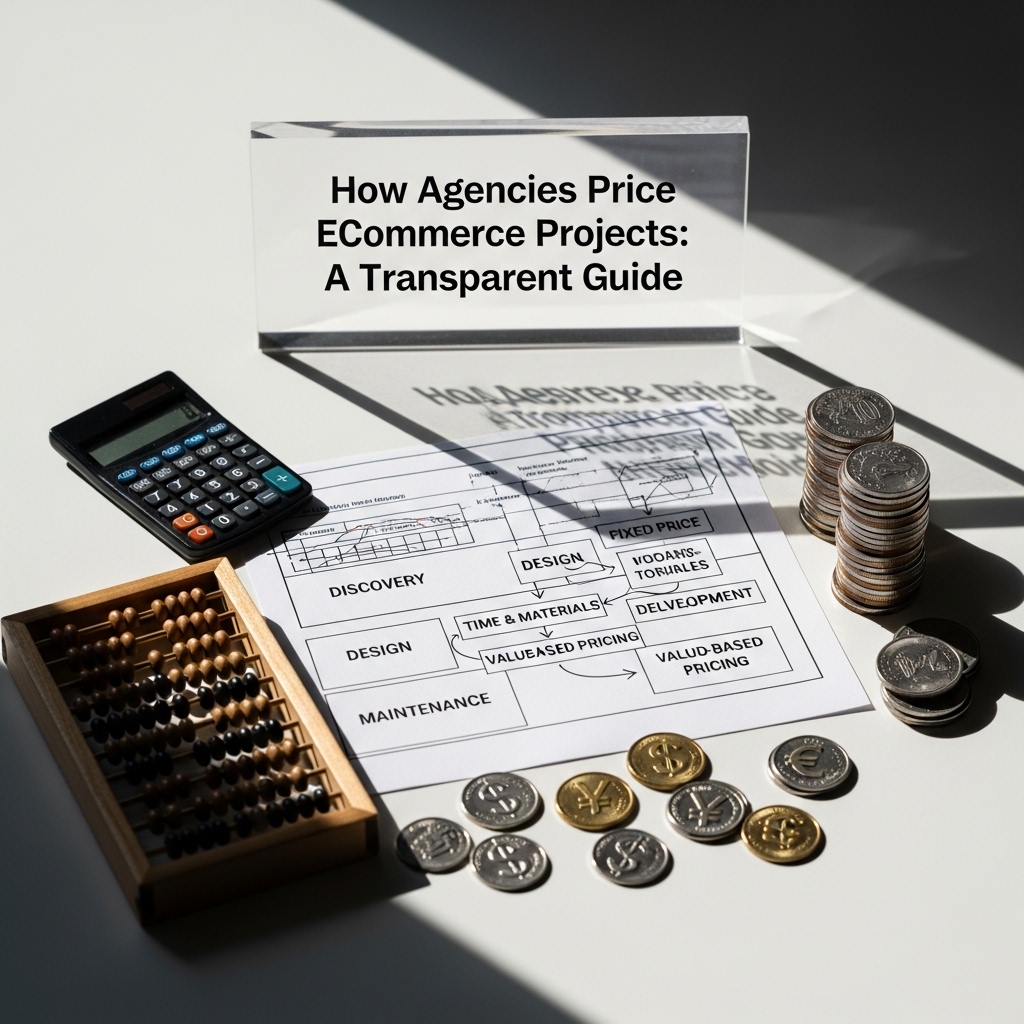
Agencies price eCommerce projects based on a mix of scope, complexity, technology stack, and ongoing support. Most use either a fixed‑price model, a time‑and‑material model, or a hybrid that adds performance‑based bonuses. Expect a base fee for design & development (₹5‑15 Lakhs for a mid‑range store) plus optional add‑ons like SEO, integrations, and maintenance.
Why Pricing Looks Different From One Agency to Another
Every agency has a “price book,” but the pages are written in three languages:
1. What they consider “core” work – UI/UX, product catalog, checkout flow.
2. What they treat as “extra” – SEO, analytics, CRO, local‑search optimisation.
3. How they manage risk – fixed scope vs. hourly buffer vs. performance incentives.
When you compare quotes, you’re not just comparing numbers; you’re comparing what’s included and what’s left out.
Pricing Models – The 3 Main Flavors
- Fixed‑Price Model – A single lump sum for the whole project. Great for well‑defined scopes, but risky if requirements change.
- Time‑and‑Material (T&M) – Billed hourly or daily. Flexible, but can balloon if you don’t control scope.
- Hybrid / Milestone‑Based – Fixed price for core phases, then T&M for extras or performance bonuses.
Snippet‑ready list:
Top 3 eCommerce pricing models: Fixed‑price, Time‑and‑material, Hybrid.
When Fixed‑Price Works (and When It Doesn’t)
If you have a clear product list, a single payment gateway, and no custom logistics, a fixed price is safe. But if you plan to add a loyalty program, multiple warehouses, or AI‑driven recommendations later, you’ll likely see change‑order fees.
Time‑and‑Material – The “Pay‑As‑You‑Go” Approach
Agencies love T&M when the project is exploratory. They’ll quote an hourly rate (₹2,500‑₹5,000 per hour) and track every minute. For a startup in Velachery launching a niche jewellery line, this can be a smart way to test ideas without a massive upfront commitment.
Hybrid – The Best of Both Worlds?
Most reputable Chennai agencies now offer a hybrid: a fixed fee for the MVP (minimum viable product) and a T&M clause for post‑launch enhancements. This reduces surprise invoices while keeping flexibility for future growth.
Breaking Down the Cost Components
Below is the “price anatomy” you’ll see on any proposal. Knowing each part helps you negotiate like a pro.
- Discovery & Strategy – Research, competitor audit, user personas. Usually 5‑10% of total cost.
- Design & UX – Wireframes, high‑fidelity mockups, responsive design. 15‑20%.
- Development – Front‑end, back‑end, CMS (Shopify, Magento, WooCommerce). 30‑40%.
- Integrations – Payment gateways, ERP, shipping APIs. 5‑10%.
- Quality Assurance – Testing on browsers, devices, load testing. 5‑8%.
- Launch & Training – Server setup, migration, client hand‑over. 3‑5%.
- Ongoing Support & Maintenance – Updates, security patches, bug fixes. Usually a monthly retainer (₹15,000‑₹50,000).
- Optional Add‑Ons – SEO, CRO, local “near me” optimisation, analytics dashboards. Priced per hour or as a package.
Definition‑style answer 1:
What is scope creep? Scope creep is the uncontrolled expansion of a project’s requirements after work has begun, often leading to higher costs and delayed timelines.
Hidden Fees – The “Fine Print” That Trips Up Local Businesses
* Third‑party licensing – Some agencies charge extra for premium plugins or themes.
* Content migration – Moving existing product data can be billed separately.
* Training sessions – A few extra hours of staff training may cost more than expected.
* Performance bonuses – Some contracts include a “sales uplift” clause that adds a percentage of revenue once targets are hit.
If you see any of these, ask for a clear line‑item explanation. Transparency is non‑negotiable.
Reality Check – What Most Chennai Businesses Get Wrong
1. Chasing the cheapest quote – Low price often means “cut‑corners” on security or scalability.
2. Ignoring local SEO – An eCommerce store without “near me” optimisation will drown in the sea of generic results.
3. Skipping the discovery phase – Skipping strategy saves a few thousand rupees but costs you in re‑work later.
Punch line: No trust = no sale.
Micro Case Example – The “Salon‑to‑eCommerce” Pivot
Client: Radhika’s Salon, Adyar, Chennai
Goal: Sell a line of organic shampoos online, targeting “salon products near me”.
Budget: ₹9 Lakhs (fixed price for MVP) + ₹20,000/month maintenance.
What changed:
* The agency initially quoted ₹5 Lakhs, excluding SEO. Radhika insisted on “near me” optimisation, adding ₹1.5 Lakhs.
* After launch, they identified a checkout friction point (missing “cash on delivery” option). A quick T&M sprint of 30 hours (₹90,000) fixed it.
Result (3 months):
* 2,300 unique visitors from “salon products near me” searches.
* Conversion rate rose from 1.2% to 3.4% after adding COD.
* Monthly revenue hit ₹3.2 Lakhs, covering the maintenance fee within 2 months.
Definition‑style answer 2:
What is a conversion rate? The percentage of website visitors who complete a desired action, such as making a purchase or filling a form.
Do This Now – 5 Immediate Steps to Guard Your Budget
- Ask for a detailed scope checklist. Use our Project Scope Template to mark every deliverable.
- Demand a line‑item cost breakdown. If an agency lumps “development” into one bucket, request sub‑categories.
- Verify local SEO inclusion. Keywords like “eCommerce store near me” or “online shop Chennai” should be in the plan.
- Set a change‑order cap. Agree on a maximum hourly rate and a ceiling for extra work.
- Schedule a post‑launch audit. A 30‑day performance review can catch hidden bugs before they affect sales.
Connecting the Dots – Internal Resources You’ll Love
* Learn how to map every step of the buyer’s path with our guide on customer journey mapping for local businesses.
* Discover the psychological triggers that increase conversions and how they fit into your eCommerce copy.
* Need a contract that protects you from scope creep? Grab our Project Scope Template today.
FAQs – Quick Answers for Busy Owners
Q1: How long does an eCommerce build usually take?
A: For a mid‑range store in Chennai, expect 8‑12 weeks from discovery to launch, assuming clear requirements.
Table of Contents
- Hook – A Chennai Street‑Level Reality Check
- Quick Answer
- Why Pricing Looks Different From One Agency to Another
- Pricing Models – The 3 Main Flavors
- Breaking Down the Cost Components
- Hidden Fees – The “Fine Print” That Trips Up Local Businesses
- Reality Check – What Most Chennai Businesses Get Wrong
- Micro Case Example – The “Salon‑to‑eCommerce” Pivot
- Do This Now – 5 Immediate Steps to Guard Your Budget
- Connecting the Dots – Internal Resources You’ll Love
- FAQs – Quick Answers for Busy Owners
- Soft Promotion – Why STACK E SYSTEMS Is Different
- Conclusion – Turn Pricing Transparency Into Profit
Q2: Is Shopify cheaper than Magento?
A: Shopify’s subscription model starts at ₹2,000/month, but custom Magento builds often have higher upfront costs and lower ongoing fees. Choose based on scalability needs.
Q3: What’s a reasonable monthly maintenance fee?
A: ₹15,000‑₹50,000, depending on traffic, updates, and support level.
Q4: Do I need a separate SEO agency?
A: Not if your eCommerce partner offers “full‑stack” services. Just verify they have proven “near me” optimisation results.
Q5: Can I pay in installments?
A: Most agencies accept milestone‑based payments: 30% upfront, 40% mid‑project, 30% on launch.
Q6: How do I protect myself from hidden costs?
A: Insist on a detailed contract, use a scope checklist, and set a ceiling for any change‑order rates.
Soft Promotion – Why STACK E SYSTEMS Is Different
When you partner with STACK E SYSTEMS, you get a Chennai‑based team that speaks your language—literally and digitally. We blend design, development, and local SEO into one transparent package, so you never see a surprise line‑item.
Got a question right now? Ping us on WhatsApp at 9445210058. We’ll walk you through a free, no‑obligation audit of your current online presence.
Conclusion – Turn Pricing Transparency Into Profit
The truth is simple: You control the price when you control the scope. By demanding a clear breakdown, insisting on local‑search optimisation, and using a reliable partner, your eCommerce store can become a revenue engine instead of a budget black hole.
Don’t let vague quotes stall your growth. Grab the tools, ask the right questions, and watch your Chennai business thrive in the digital marketplace.
Your next step? Reach out, share your vision, and let us build a roadmap that respects both your brand and your bottom line. The eCommerce world is waiting—let’s price it transparently, together.