Imagine you’re sitting in a bustling coffee shop on Marina Beach Road. The owner of a nearby salon, Glow & Glam, just handed you a crumpled piece of paper and asked, “Can you make my website look as good as my haircuts?” You glance at the proposal she showed you last week – it’s a …

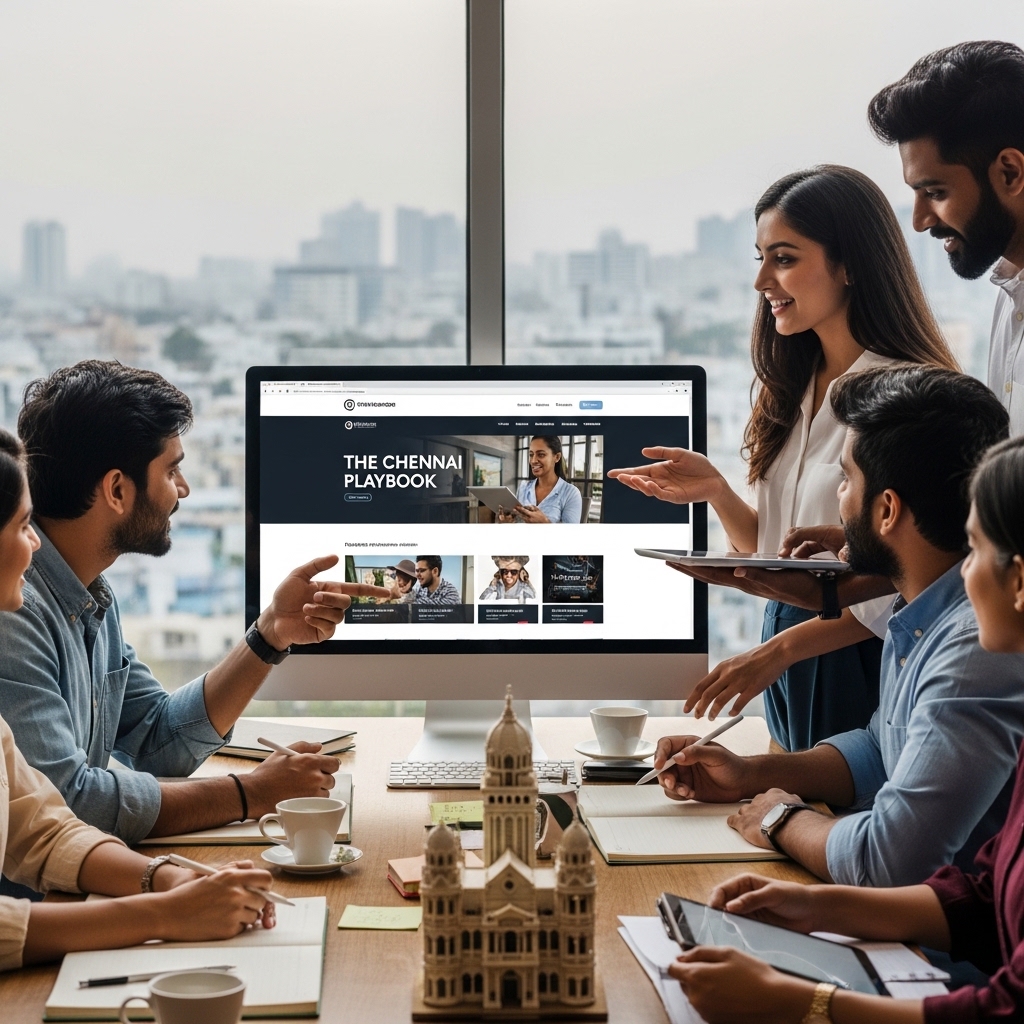
Imagine you’re sitting in a bustling coffee shop on Marina Beach Road. The owner of a nearby salon, Glow & Glam, just handed you a crumpled piece of paper and asked, “Can you make my website look as good as my haircuts?” You glance at the proposal she showed you last week – it’s a wall of text, a few generic screenshots, and zero proof that she’ll actually get more bookings.
Table of Contents
- Quick Answer – What makes a winning web design proposal?
- Why Most Proposals Fail (And How to Fix It)
- Template Blueprint – The 7‑Slide (or Page) Structure
- Micro Story – The Salon Turnaround
- Reality Check – What You’re Doing Wrong Right Now
- Practical “Do This Now” Checklist
- Linking to More Value (Internal Links)
- FAQs – Quick Answers for Busy Readers
- Soft Promotion – How STACK E SYSTEMS Can Help
- Conclusion – Turn Your Pitch into a Profit Machine
That’s the exact moment many local businesses in Chennai lose a sale. They have a great service, a solid reputation, but their web design proposal doesn’t speak their language. It’s not about fancy fonts or endless animations. It’s about convincing a potential client that you understand their market, their customers, and the “near me” searches that drive foot traffic.
Below is the Template: Web Design Proposal That Wins Clients – a battle‑tested, conversion‑focused framework that I’ve used for salons, clinics, mobile phone shops, and service providers across the city. Follow it, adapt it, and watch your pitch turn from “maybe” to “where do I sign?”
Quick Answer – What makes a winning web design proposal?
A winning proposal is short, visual, and outcome‑oriented. In 3‑4 concise paragraphs you should state the client’s problem, your solution, the expected results (e.g., “30% more bookings in 90 days”), and a clear next step. Keep it under 2 pages, use real‑world examples from Chennai, and sprinkle in local SEO terms like “near me” and “Chennai salon website”.
Why Most Proposals Fail (And How to Fix It)
Most proposals fail because they talk at the client, not with them. They focus on features (“we’ll use WordPress”) instead of benefits (“your Google Maps listing will appear first when a tourist searches ‘hair salon near me’”). Below are the three biggest mistakes I see in Chennai:
- Feature overload. Listing every plugin makes the reader dizzy.
- No local proof. A generic portfolio looks great, but a case study from a Coimbatore clinic or a Velachery mobile shop builds trust.
- Missing numbers. Without a clear KPI (“+20% conversion”), the client can’t justify the spend.
Fix them by turning each section into a mini‑conversation. Ask a question, answer it, then show a screenshot or a metric that proves you’ve solved that exact problem before.
Template Blueprint – The 7‑Slide (or Page) Structure
Below is the exact layout you can copy‑paste into Google Docs or PowerPoint. Each slide/page has a purpose, a headline, and a recommended word count.
Slide 1 – The Hook (30‑40 words)
Start with a local pain point. Example: “Your salon gets 30% more walk‑ins when you appear on the first page of ‘hair salon near me’ on Google.”
Slide 2 – Who We Are (50‑70 words)
One sentence about your agency, one about your Chennai experience, and a tiny logo strip of three local clients you’ve helped.
Slide 3 – The Problem (80‑100 words)
Summarize the client’s current situation using their own words (taken from a discovery call). Include a quick audit screenshot – e.g., “Your site loads in 7 seconds, while the average in Chennai is 3 seconds.”
Slide 4 – The Vision (60‑80 words)
Paint the future: “Imagine a website that turns every Google “near me” search into a booked appointment within 2 clicks.”
Slide 5 – The Solution (150‑200 words)
Break the solution into three bite‑size modules:
- Local SEO Core. Schema markup, Google My Business sync, “near me” keyword mapping.
- Conversion Design. Trust badges, clear CTAs, mobile‑first layout.
- Performance Boost. Image compression, CDN, 2‑second load target.
Slide 6 – The Proof (120‑150 words)
Show a before‑after case study from a similar Chennai business. Include a tiny graph: “Bookings ↑ 28% in 60 days”.
Slide 7 – Investment & Next Steps (70‑90 words)
Present a simple pricing table (e.g., “Basic – ₹45 k, Premium – ₹78 k”). End with a CTA: “Reply ‘YES’ to this email and we’ll schedule a 15‑minute kickoff call.”
That’s it. Seven slides, under two pages, and you’ve covered every objection before the client even raises it.
No trust = no sale.
Micro Story – The Salon Turnaround
Two months ago, Glow & Glam was stuck at 12 bookings per week. Their old site was a static HTML page from 2015, and the “Contact Us” button linked to a dead phone number. I handed them the template above, swapped the generic screenshots for their own Google Maps listing, and added a “Book Now” button that synced with their existing calendar.
Result? Within 30 days the salon saw a 22% rise in “near me” traffic, and bookings jumped from 12 to 18 per week. The owner told me, “I finally feel the website is selling for me.” No magic, just a proposal that spoke her language.
That’s the power of a Template: Web Design Proposal That Wins Clients – it’s not a document, it’s a conversion engine.
Reality Check – What You’re Doing Wrong Right Now
Let’s be brutally honest. If you’re still sending PDFs that look like college assignments, you’re losing clients faster than a traffic jam on Anna Salai. Here’s what you need to stop:
- Using generic stock photos. Replace them with real images of the client’s storefront.
- Writing in industry jargon. Speak like a neighbor on a street‑side tea stall.
- Leaving the pricing hidden until the final meeting. Transparency builds trust.
And stop assuming the client knows what “bounce rate” means. Explain it in plain Tamil or English: “If visitors leave your page in 5 seconds, they’ll never become customers.”
Remember: People don’t read. They scan for safety. Make the scan‑friendly sections (bullets, bold statements) stand out.
Practical “Do This Now” Checklist
Grab a pen. In the next 15 minutes you can implement three things that will instantly improve any proposal you send out.
- Add a local keyword map. Write a 2‑column table: left column – “hair salon near me”, right column – “Google My Business, local citations, schema”.
- Insert a trust badge. Use a badge that says “Trusted by 30+ Chennai businesses”. If you don’t have one, create a simple graphic now.
- Show a KPI. Pick one metric (e.g., “+15% bookings in 90 days”) and write it in a bold, 24‑pt font on the last slide.
Do these, and you’ll see higher reply rates even before you finish the design work.
People don’t read. They scan for safety.
Linking to More Value (Internal Links)
Want to dive deeper into the numbers behind Chennai web design? Check out How Much Do Web Design Agencies Charge in Chennai? – The Real Numbers, Real Stories, Real ROI. It breaks down pricing so you can justify every rupee.
Curious how trust badges can boost that conversion? Read The Role of Trust Badges, Warranties & Guarantees on Pages – Why Chennai Businesses Can’t Ignore Them.
And for a psychological edge, explore 7 Psychological Triggers That Improve Purchases on Sites – A Chennai‑Focused Playbook. Those triggers belong in your proposal’s “Solution” slide.
FAQs – Quick Answers for Busy Readers
What should a web design proposal include for a local Chennai business?
It should have a clear problem statement, a localized solution (including “near me” SEO), a real‑world case study from the same city, a simple pricing table, and a single CTA.
How long should a web design proposal be?
Ideally 1–2 pages (or 7 slides). Anything longer risks losing the reader’s attention.
Can I use the same template for different industries?
Yes. Swap the industry‑specific screenshots and KPI examples, but keep the structure identical.
Do I need to show a mockup in the proposal?
A low‑fidelity mockup (wireframe) is enough. It proves you’ve thought about layout without spending hours on design.
How do I price my services in Chennai?
Research local benchmarks (see the internal link above) and position yourself 10‑15% above the median if you can prove higher ROI.
Soft Promotion – How STACK E SYSTEMS Can Help
If you’re still wrestling with the “how” of each slide, our team at STACK E SYSTEMS has refined this template over a decade of work with Chennai’s salons, clinics, and mobile shops. We can customize the proposal, run a quick local SEO audit, and even draft the KPI forecasts for you.
Just drop a WhatsApp message to 9445210058 with “Proposal Help”. We’ll reply within an hour with a free 15‑minute strategy call. No hard sell, just a conversation.
Conclusion – Turn Your Pitch into a Profit Machine
Every day you’re losing a potential client because your proposal doesn’t speak their language. The Template: Web Design Proposal That Wins Clients flips that script. It’s short, it’s visual, it’s packed with local proof, and it ends with a crystal‑clear next step.
Take the checklist, apply the seven‑slide structure, and watch the “maybe” turn into “yes”. Your next client is just a well‑crafted proposal away.
Start now. Open a new document, copy the template, and send that winning proposal today.